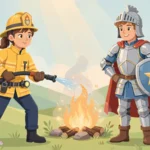
Fire is a small word with big meanings. Most people first think of flames, the bright heat that burns wood and warms homes. But in offices and workplaces, fire has a very different meaning: to dismiss someone from a job. When a boss says an employee was fired, it means the person lost the job. Because this word appears in news, movies, and daily talk, learning synonyms for fire helps students write better, bloggers sound fresh, and English users say exactly what they mean. This article starts with words for losing a job, then covers words for flames. These synonyms for fire will help you pick the right word every time.
Dismiss
Meaning: To officially remove someone from a job.
Examples:
- The company decided to dismiss him after many warnings.
- She was dismissed for breaking the safety rules.
Sack
Meaning: To fire someone from a job, common in British English.
Examples:
- The coach was sacked after the team lost ten games.
- They sacked the manager for poor results.
Terminate
Meaning: To end someone’s employment in a formal way.
Examples:
- The contract was terminated last month.
- HR terminated his employment after the investigation.
Discharge
Meaning: To release someone from a job or duty.
Examples:
- The soldier was discharged from the army.
- She was discharged from her position in June.
Axe
Meaning: To suddenly remove someone from a job or cut a plan.
Examples:
- The new owner axed half the staff.
- The TV show was axed after one season.
Can
Meaning: To fire someone, used in casual American speech.
Examples:
- He got canned for coming late every day.
- The boss canned three workers this week.
Lay Off
Meaning: To dismiss workers because there is not enough work or money.
Examples:
- The factory laid off two hundred people.
- She was laid off when the store closed.
Let Go
Meaning: To dismiss someone in a gentle or polite way.
Examples:
- They let him go after the project ended.
- The company had to let go of ten employees.
Release
Meaning: To free someone from a job or contract.
Examples:
- The club released the player at the end of the season.
- She was released from her contract early.
Remove
Meaning: To take someone out of a job or position.
Examples:
- The board removed him as chairman.
- The principal was removed from office.
Oust
Meaning: To force someone out of a position of power.
Examples:
- The members voted to oust the president.
- He was ousted from the committee.
Expel
Meaning: To force someone to leave a school, club, or country.
Examples:
- The student was expelled for cheating.
- Two players were expelled from the team.
Eject
Meaning: To push or throw someone out with force.
Examples:
- Security ejected him from the building.
- The angry fan was ejected from the stadium.
Boot Out
Meaning: To force someone to leave in a rough or sudden way.
Examples:
- They booted him out of the group chat.
- The landlord booted out the noisy tenants.
Show the Door
Meaning: To tell someone to leave a job or place.
Examples:
- The manager showed him the door after the fight.
- She was shown the door for leaking secrets.
Give the Boot
Meaning: To dismiss someone, a casual idiom.
Examples:
- He got the boot for sleeping at work.
- The startup gave the boot to its first designer.
Pink-Slip
Meaning: To fire someone, from the old pink dismissal notice.
Examples:
- Hundreds were pink-slipped during the merger.
- She feared getting pink-slipped before Christmas.
Cashier
Meaning: To dismiss an officer from the military in disgrace.
Examples:
- The officer was cashiered for disobeying orders.
- He was cashiered after the failed mission.
Cut Loose
Meaning: To end a work relationship and set someone free to go.
Examples:
- The agency cut him loose after the scandal.
- They cut loose five contractors in January.
Send Packing
Meaning: To dismiss someone and tell them to leave at once.
Examples:
- The boss sent him packing for lying.
- She was sent packing after one mistake.
Blaze
Meaning: A bright, strong fire that burns fast.
Examples:
- The blaze destroyed three houses.
- Firefighters fought the blaze all night.
Inferno
Meaning: A very large and uncontrolled fire.
Examples:
- The warehouse became an inferno within minutes.
- They escaped the inferno through the back door.
Conflagration
Meaning: A big fire that destroys many buildings or a wide area.
Examples:
- The conflagration left hundreds homeless.
- Old towns feared conflagration every summer.
Wildfire
Meaning: A fire that spreads fast through forests or dry land.
Examples:
- The wildfire burned ten thousand acres.
- Strong winds made the wildfire worse.
Bonfire
Meaning: A large outdoor fire for warmth or celebration.
Examples:
- We sat around the bonfire and sang songs.
- The town lit a bonfire for the festival.
Flames
Meaning: The bright, hot parts of a fire that you can see.
Examples:
- Flames rose high above the roof.
- She watched the flames dance in the fireplace.
Combustion
Meaning: The chemical process of burning that makes heat and light.
Examples:
- The engine uses combustion to make power.
- Scientists study combustion to build safer engines.
Flare-Up
Meaning: A sudden burst of fire or flames.
Examples:
- A flare-up in the kitchen set off the alarm.
- The wind caused another flare-up in the forest.
Ignition
Meaning: The moment when something catches fire and starts burning.
Examples:
- The ignition of the dry grass was instant.
- A spark caused the ignition of the fuel.
Torch
Meaning: To set fire to something on purpose.
Examples:
- Vandals torched the old car.
- The old papers were torched in the backyard.
Conclusion
From the office to the fireplace, the word fire now has thirty clear replacements in your pocket. Use dismiss, sack, or let go when you talk about jobs, and blaze, inferno, or wildfire when you talk about flames. Learning these words makes your writing sharper and your speaking more exact. Try two or three in your next essay or conversation, and soon they will come out naturally every time you write.

Jonathan writes simple, easy-to-understand English vocabulary guides, word meanings and synonyms at SimilGrid.